Shane Ram asked me a question that made me really glad we’d connected: How do you create transformation that lasts?
He put his finger on something important: interventions that don’t hold up under pressure.
I’m glad you asked, Shane. That question deserves more than a quick reply in a DM.
So here’s my answer.
It Starts On My Motorcycle
Motorcycling is a highly complex skill that takes years and thousands of hours of practice.
It’s an orchestration of vision, motor skills, reaction, anticipation and — let’s call it — super-focus.
You need to unlearn your fear of leaning, and to unlearn the reflex to grab the front brake if something crosses your path.
You practise gently squeezing the lever to load the front tyre, then progressively building pressure — the opposite of that reflex to grab.
And then you think — I’ve got it. It works fantastically in every standard braking situation.
Now — Saturday, 13:25. Your 13-year-old son asks you to pick up his Yu-Gi-Oh! card collection from his friend’s house — just 3 km away. A good reason, of course, to take the motorcycle. The weather is fantastic.
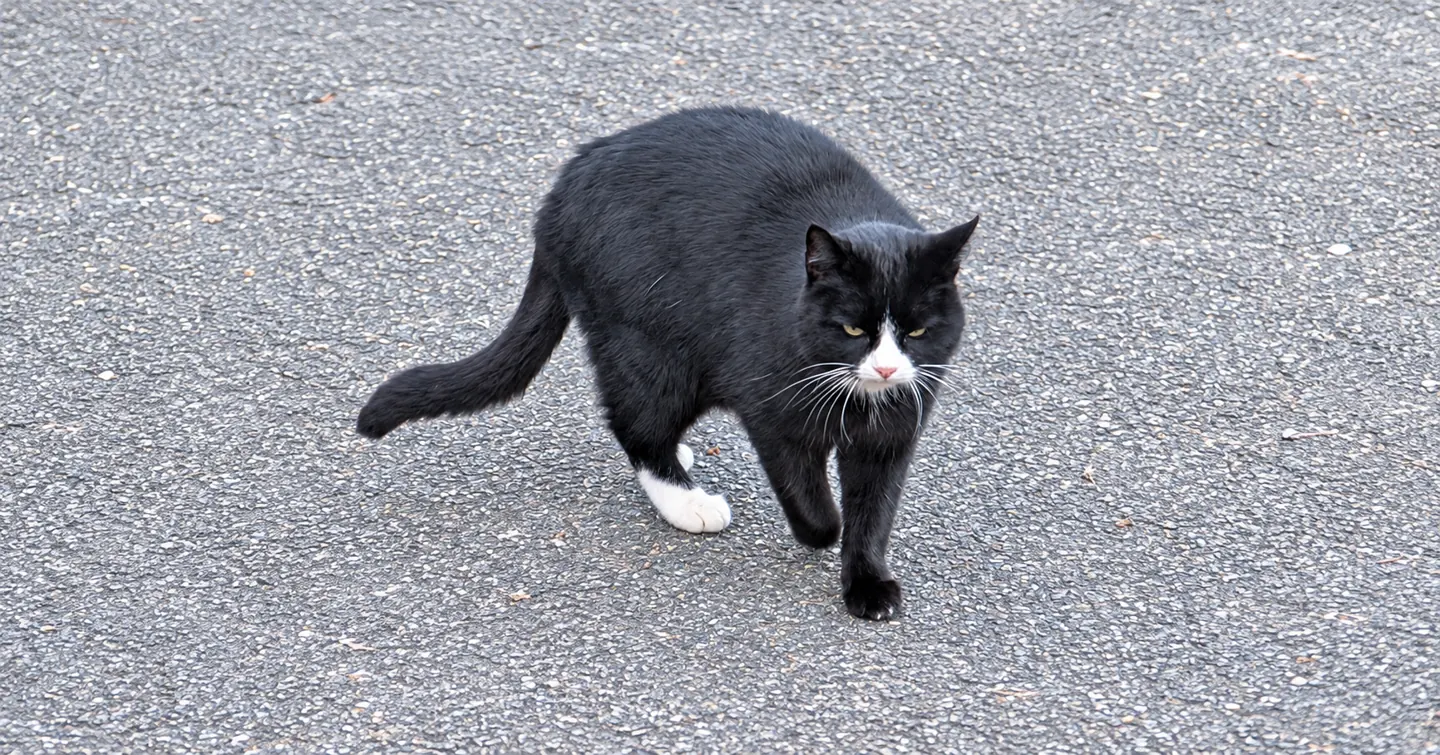
On the way back, 200 metres from your house, your tomcat hears your bike (we all love it when cats can do that) and HOPS right in front of you.
PANG — ALL-IN — FRONT BRAKE — and you’re glad if the ABS saves you.
WHERE THE HELL DID YOUR BRAKING SKILLS GO?
The training hasn’t disappeared. But knowing what to do and being able to do it when you’re frightened or under stress are two different things.
My learning to ride has been massively influenced by DanDanTheFireman, who analyses crashes so we can learn from them.
On his website, he puts it like this:
“You build habits that feel fine until they’re tested.”
Now Take A Yoga Workshop.
For a moment, something shifts. Your body lets go. You experience a kind of openness you didn’t know was possible.
You open your eyes, and the world is full of LOVE.
You get up. You find yourself holding someone’s gaze for minutes, without feeling the need to look away. Everyone is smiling, radiating warmth.
You leave thinking: this changes everything.
Then you get home. The kitchen looks exactly as you left it. Someone needs something. By Monday morning, you’re wondering where that feeling went.
That openness was real. So was the control I’d developed on the motorcycle.
And losing access to something you’ve genuinely experienced can be deeply unsettling.
You know it was possible. You were there.
So why can’t you get back there?
Was it just the room? The teacher? The people around you? What’s wrong with you that you can’t hold on to it?
Perhaps nothing is wrong with you. Perhaps experiencing something once and making it part of your everyday life are two different things.
Get back on your motorcycle. Go back to yoga.
Keep practising.
One day — perhaps one day — you’ll brake the way you practised when it really matters.
And you’ll still see the LOVE in the eyes of the person in front of you, even after you’ve left the workshop.
But there’s another complication.
If “transformation” is the expected outcome of a workshop, participants may become very good at producing one.
Sometimes we really believe we’ve got it. Sometimes we’ve simply figured out what to say so everyone can go home happy.
At least until Saturday, 13:25.
And we coaches risk delivering yet another workshop that creates a visible effect — briefly.
Then the effect fades. Time to bring in the next coach.
In the workshop, you were “the likeable coach.”
Back at work, you’re “the one who has no idea what it’s actually like here.”
Perhaps we need to take that seriously.
We return to people and conditions with whom we keep recreating the familiar game. Everyone knows their part. We know what’s expected of us and how to get by.
That’s a comfort zone, too. It doesn’t have to feel good. It can simply feel familiar.
And here’s the irony: the old organisation probably wouldn’t hire the person we’ve just helped someone become.
So what happens when the old response takes over?
When our confidence is shaken, and it’s tempting to say: well, that didn’t work after all.
Do we practise again, perhaps differently this time? Who is there to help us? And what needs to change around us?
If we leave people to navigate that return to everyday life on their own, we leave far too much to chance.
That’s where transformation needs continued practice, feedback and support. And the organisation has to make room for the change, too.
Years ago at Swisscom, I used to say: “We have to change our digital DNA.”
Sounds impressive on a slide. But what does that actually mean on a Tuesday morning?
If it isn’t built into your day-to-day muscle memory, it’s not DNA. It’s just noise.
Dear Shane,
If I really had the answer, I’d be leading yoga workshops on a warm island. Or tending the garden in a Zen monastery.
I only have ideas. And I won’t lose heart.
But when someone tells me “I’ve got it” at the end of a workshop, I want to know how they’re doing a month later.
Not over a call. In person. Eye to eye.