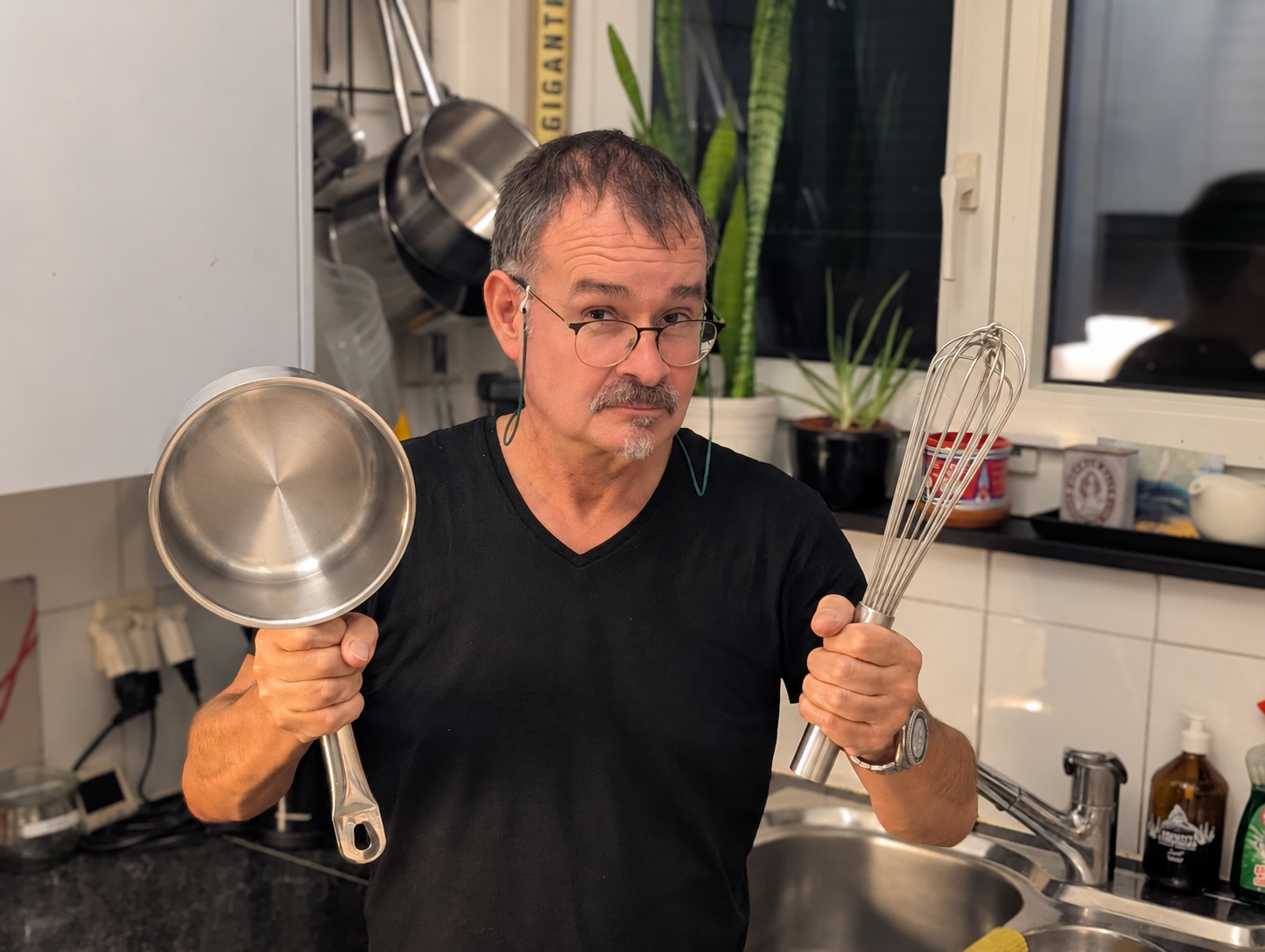
My longtime friend Sven and I have done an incredible amount of cooking together. Meals, cooking events, kitchens full of guests. Put us in the smallest kitchen and somehow we never get in each other’s way. When one of us needs a utensil, the other is already holding it out. We cook, pass things, make room for each other. And have fun. Even under enormous time pressure, it becomes playful and light.
I’ve experienced something similar in a gardening team. Four people: one on the ride-on mower, two with trimmers, one with the leaf blower. The machines are so loud that we can’t talk to each other. Across the property, we’re out of sight of each other most of the time. And somehow we finish at exactly the same time. Everything done. Equipment back in the van. The place looks bloody lovely.
How does that work?
We keep adjusting to each other, without a word, until the whole job is done. Working together has given us a feel for things that we can respond to. The timing. What the work needs. What the others need. We use more of our senses than a meeting agenda has room for.
I find that extraordinary. Especially because you can’t simply pick the most experienced person, put them in charge and expect this interplay to emerge.
A three-Michelin-star chef may never find that rhythm. Your best gardener may be a brilliant solo performer. Someone you barely noticed may turn out to be the person everyone works better with.
You only discover all this when people really work together.
And I wonder how much we miss when we assess people one at a time. Their skills. Their experience. Their individual performance. All worth knowing. But there’s also what happens between them.
Who helps whom find their place? Who makes room? Who senses when to step in and when to let someone get on with it? Which people, together, can do something none of them could create alone?
That, too, should belong in our understanding of human potential.
Give people time. Pay attention. See what develops. Find out which combinations bring something alive.
Sven and I have had forty-four years to learn this. An experienced team develops its own understanding. It would be a shame to mistake all that for “they’ve divided up the tasks well.”
Now, if you’ll excuse me, Sven has the whisk.